

Why Do Some Herons Follow People, Cattle, and Fishing Activities

What is in this article?
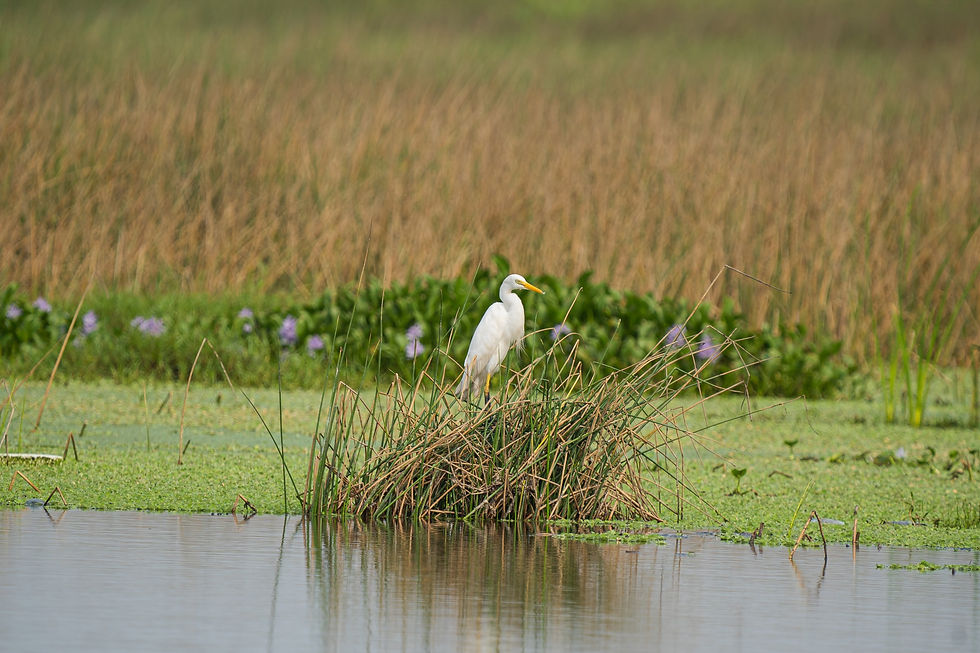
Herons are often associated with wetlands, rivers, and lagoons, where they patiently hunt for fish and other prey. Yet, their lives in Ghana extend beyond the water. The Cattle Egret (Bubulcus ibis), for example, is known for foraging around cattle and other grazing animals, catching insects and small creatures disturbed by their movements. In Ghana, research has also documented Cattle Egrets feeding in grassy areas, silted drains, and landfill sites in Greater Accra. Meanwhile, the Little Egret (Egretta garzetta) and Western Reef Heron (Egretta gularis) have been recorded using grassy areas around Sakumo II Lagoon, showing that these birds do not depend on open water alone for food.
These observations raise an interesting question: how do human activities and the movements of domestic animals shape the feeding opportunities available to herons in Ghana?
Related: What does an oriole look like
How Herons Take Advantage of Human and Animal Activities

Imagine a cow walking through a patch of tall grass, unaware that every step it takes could help a bird find its next meal. As the cow moves, grasshoppers, beetles, and other small creatures scatter from their hiding places. Nearby, a watchful bird waits for the perfect moment to strike. For the bird, the cow has become an unwitting hunting partner.
This is one of the advantages herons gain from the activities of other animals. Rather than searching for every prey item themselves, some can take advantage of the disturbance created by grazing, trampling, or movement through vegetation. The Cattle Egret is particularly well known for this behaviour, often following livestock as they graze and snapping up insects flushed from the grass.
Fishing activities can create similar opportunities. As fishers pull nets through shallow water, small fish may scatter or escape into exposed areas. A heron watching from the bank or standing nearby may seize the opportunity to catch one. It is a little like waiting for someone else to open a door: the bird does not create the opportunity, but it is ready to take advantage of it.
Human activities on land can also make prey easier to find. Mowing grass, digging soil, or walking through vegetation may expose insects and other small animals that would otherwise remain concealed. Herons that forage in these environments can benefit from the sudden availability of food.
The fascinating part is that these birds do not need to influence what people or animals are doing. They simply need to be observant and ready to act. A cow grazing, a fisher hauling in a net, or a person working in a field may seem occupied with entirely different tasks. But to a hungry heron nearby, each activity could signal one thing: an opportunity for an easy meal.
Related: The colourful turacos of Ghana
Why Do Some Herons Follow Cattle While Others Do Not?

Although several heron species may use the same fields and wetlands, they do not all take advantage of grazing cattle in the same way. The Cattle Egret (Bubulcus ibis) is especially well known for feeding around livestock, but other herons are more commonly seen searching for food in shallow water, along lagoon edges, or on exposed shorelines. Why do they behave differently?
Much of the difference comes down to where each species finds its food and how it hunts. Cattle Egrets are well suited to feeding on insects and other small animals in grassland. When cattle move through vegetation, they disturb prey that the birds can catch. Following livestock, therefore, gives them a useful feeding opportunity without requiring them to search for every patch of grass themselves.
Other herons tend to exploit different opportunities. The Little Egret (Egretta garzetta), for instance, often feeds in shallow water, catching small fish and aquatic invertebrates. The Western Reef Heron (Egretta gularis) is commonly associated with coastal habitats, where it searches for prey along shorelines and tidal flats. Although these species may also forage on land, following cattle is not as characteristic of their feeding behaviour as it is for the Cattle Egret.
However, this does not mean that one species will always follow cattle while another will never do so. Herons are flexible in their feeding habits, and their choices can change depending on the prey available and the surrounding habitat. A bird may use a grassy field when food is plentiful there, then return to a lagoon or shoreline when conditions change.
In Ghana, where grazing areas, wetlands, and coastal habitats can occur close to one another, these differences offer an interesting way to understand how herons share their environment.
The key is not simply whether a bird encounters cattle, but whether the opportunities created by their movements suit the bird's feeding habits.


